
Politics
Top EU official draws line between enlargement, neighborhood policies
Reading Time: 3 minutesThe first Eastern European to be trusted with a significant foreign-policy role in the European Union went through his confirmation hearing today and stuck closely to the established political consensus within the bloc on future expansion, arguing that all current candidates should be admitted

By Ahto Lobjakas
The first Eastern European to be trusted with a significant foreign-policy role in the European Union went through his confirmation hearing today and stuck closely to the established political consensus within the bloc on future expansion, arguing that all current candidates should be admitted
Stefan Fule is a former Czech diplomat and Europe minister who will work under the EU’s new high representative for foreign policy, Catherine Ashton.
The prevailing view in the EU is that while the EU’s final borders are as yet undecided, only the western Balkan countries stand a realistic — albeit increasingly contested — chance of entry in the foreseeable future. Turkey, although a candidate country, faces possibly fatal opposition by France and Germany.
Championing the cause of further EU expansion, Fule appealed to historical justice and the importance of accession prospects in encouraging reforms, using his native Czech Republic as a case in point.
"To me, enlargement is more than a policy portfolio. It has transformed my country and my own life. It has transformed Europe as a whole. It has restored hope and dignity to millions of people. This is why I am a strong believer in further reunification," Fule told the European Parliament’s Foreign Affairs Committee.
Fule, who stepped down from his job as a junior Czech minister last year, is relatively unknown on the EU stage. But in the amphitheater-like hall where the hearing was held, Fule appeared confident throughout the three hours of interrogation by EU deputies. His credentials and expertise were not seriously questioned, and only passing mention was made of his past as a communist functionary in Czechoslovakia in the 1980s.
The relatively low-key atmosphere of Fule’s hearing — and that of Catherine Ashton’s on January 11 — is a reflection of the desire of the leading political groups in the European Parliament to avoid another political upheaval in the EU so soon after the long-awaited Lisbon Treaty came into force last month.
United Front
Foreign-policy related appointments are seen as key for the smooth functioning of the EU under the Lisbon Treaty, and Ashton’s and Fule’s hearings have attracted intense media attention.
Although European Commission head Jose Manuel Barroso appeared to deliver a blow to Ashton when he split the enlargement-and-neighborhood brief from her portfolio, she and Fule have taken pains to present a united front.
Fule openly deferred to Ashton’s primacy in determining the strategic goals of the EU’s Neighborhood Policy.
Ashton, who will head the EU’s future External Action Service — effectively a thousands-strong diplomatic corps — will also control the lion’s share of the bloc’s foreign-policy budget. But Fule can expect more leeway in enlargement matters, where the European Commission reports directly to the member states.
Fule’s predecessor as enlargement commissioner, Olli Rehn, representing Finland, enjoyed great personal authority in his handling of the dossier.
Fule today repeated what effectively became Rehn’s mantra over the past five years — that the successful integration of the western Balkan countries is vital for the EU’s own stability and that their eventual EU accession is the best way of doing that.
"This is a priority I will be focusing [on] in the years to come — on the Balkans — also making sure that we do not leave any country from the western Balkans behind [or out] in the cold," Fule said.
Fule said he will work with politicians across the EU to reinforce the case for the speedy accession of Croatia, Macedonia, Serbia, Bosnia-Herzegovina, Albania, and eventually, Kosovo.
But he explicitly ruled out a "privileged partnership" for Turkey, saying the ongoing accession talks are about full membership.
Distant Neighbors
The commissioner-elect was markedly less expansive in his comments about the neighborhood part of his portfolio.
On January 11, Ashton did not address the EU’s neighbors’ eventual membership prospects, and today, although Fule promised "deeper" relations and "the closest dialogue possible," he also refused to directly respond to questions about whether the EU’s eastern neighbors — Ukraine, Moldova, Belarus, and the three Caucasus countries — qualify as "European countries" in terms laid out by the EU’s basic treaties.
That’s a significant blow for Ukraine, especially — which top EU officials have described as "European" — even if Kyiv has never explicitly been promised membership.
Fule is also likely to have caused some alarm in Eastern European capitals by his apparent willingness to accommodate Russia’s ambitions in the region.
"The future of Eastern Europe, as I see it, is a future where each and every country of Eastern Europe is in charge [of] steering its own future closer to the European Union and closer to Russia," Fule said.
"I don’t see any problem or any contradiction here. I don’t think it is [necessary] for these countries to choose between better relations with the European Union or better relations with Russia."
In a different context, Fule did stress that Russia must be a "constructive partner" to the EU and abandon any "zero-sum" strategies for domination in Eastern Europe.


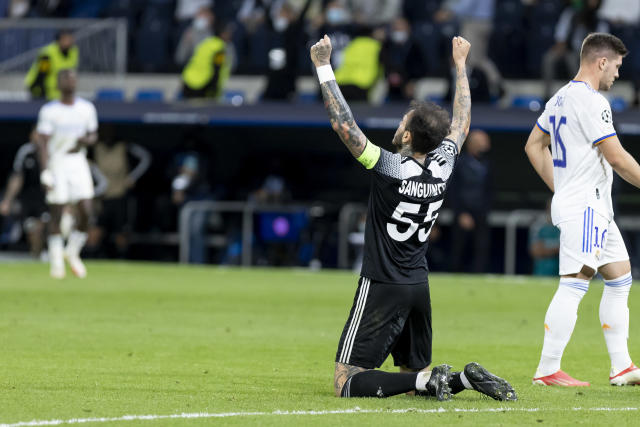
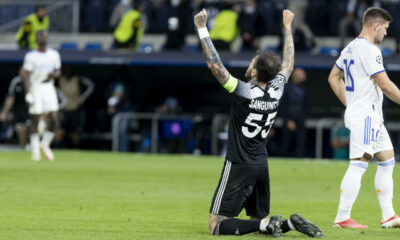
A new football club has earned a leading place in the UEFA Champions League groups and starred in the headlines of worldwide football news yesterday. The Football Club Sheriff Tiraspol claimed a win with the score 2-1 against Real Madrid on the Santiago Bernabeu Stadium in Madrid. That made Sheriff Tiraspol the leader in Group D of the Champions League, including the football club in the groups of the most important European interclub competition for the first time ever.
International media outlets called it a miracle, a shock and a historic event, while strongly emphasizing the origin of the team and the existing political conflict between the two banks of the Dniester. “Football club from a pro-Russian separatist enclave in Moldova pulls off one of the greatest upsets in Champions League history,” claimed the news portals. “Sheriff crushed Real!” they said.
Moldovans made a big fuss out of it on social media, splitting into two groups: those who praised the team and the Republic of Moldova for making history and those who declared that the football club and their merits belong to Transnistria – a problematic breakaway region that claims to be a separate country.
Both groups are right and not right at the same time, as there is a bunch of ethical, political, social and practical matters that need to be considered.
Is it Moldova?
First of all, every Moldovan either from the right or left bank of Dniester (Transnistria) is free to identify himself with this achievement or not to do so, said Vitalie Spranceana, a sociologist, blogger, journalist and urban activist. According to him, boycotting the football club for being a separatist team is wrong.
At the same time, “it’s an illusion to think that territory matters when it comes to football clubs,” Spranceana claimed. “Big teams, the ones included in the Champions League, have long lost their connection both with the countries in which they operate, and with the cities in which they appeared and to which they linked their history. […] In the age of globalized commercial football, teams, including the so-called local ones, are nothing more than global traveling commercial circuses, incidentally linked to cities, but more closely linked to all sorts of dirty, semi-dirty and cleaner cash flows.”
What is more important in this case is the consistency, not so much of citizens, as of politicians from the government who have “no right to celebrate the success of separatism,” as they represent “the national interests, not the personal or collective pleasures of certain segments of the population,” believes the political expert Dionis Cenusa. The victory of FC Sheriff encourages Transnistrian separatism, which receives validation now, he also stated.
“I don’t know how it happens that the “proud Moldovans who chose democracy”, in their enthusiasm for Sheriff Tiraspol’s victory over Real Madrid, forget the need for total and unconditional withdrawal of Russian troops from Transnistria!” declared the journalist Vitalie Ciobanu.
Nowadays, FC Sheriff Tiraspol has no other choice than to represent Moldova internationally. For many years, the team used the Moldovan Football Federation in order to be able to participate in championships, including international ones. That is because the region remains unrecognised by the international community. However, the club’s victory is presented as that of Transnistria within the region, without any reference to the Republic of Moldova, its separatist character being applied in this case especially.
Is it a victory?
In fact, FC Sheriff Tiraspol joining the Champions League is a huge image breakthrough for the Transnistrian region, as the journalist Madalin Necsutu claimed. It is the success of the Tiraspol Club oligarchic patrons. From the practical point of view, FC Sheriff Tiraspol is a sports entity that serves its own interests and the interests of its owners, being dependent on the money invested by Tiraspol (but not only) oligarchs.
Here comes the real dilemma: the Transnistrian team, which is generously funded by money received from corruption schemes and money laundering, is waging an unequal fight with the rest of the Moldovan football clubs, the journalist also declared. The Tiraspol team is about to raise 15.6 million euro for reaching the Champions League groups and the amounts increase depending on their future performance. According to Necsutu, these money will go directly on the account of the club, not to the Moldovan Football Federation, creating an even bigger gab between FC Sheriff and other football clubs from Moldova who have much more modest financial possibilities.
“I do not see anything useful for Moldovan football, not a single Moldovan player is part of FC Sheriff Tiraspol. I do not see anything beneficial for the Moldovan Football Federation or any national team.”
Is it only about football?
FC Sheriff Tiraspol, with a total estimated value of 12.8 million euros, is controlled by Victor Gusan and Ilya Kazmala, being part of Sheriff Holding – a company that controls the trade of wholesale, retail food, fuels and medicine by having monopolies on these markets in Transnistria. The holding carries out car trading activities, but also operates in the field of construction and real estate. Gusan’s people also hold all of the main leadership offices in the breakaway region, from Parliament to the Prime Minister’s seat or the Presidency.
The football club is supported by a holding alleged of smuggling, corruption, money laundering and organised crime. Moldovan media outlets published investigations about the signals regarding the Sheriff’s holding involvement in the vote mobilization and remuneration of citizens on the left bank of the Dniester who participated in the snap parliamentary elections this summer and who were eager to vote for the pro-Russian socialist-communist bloc.
Considering the above, there is a great probability that the Republic of Moldova will still be represented by a football club that is not identified as being Moldovan, being funded from obscure money, growing in power and promoting the Transnistrian conflict in the future as well.
Photo: unknown
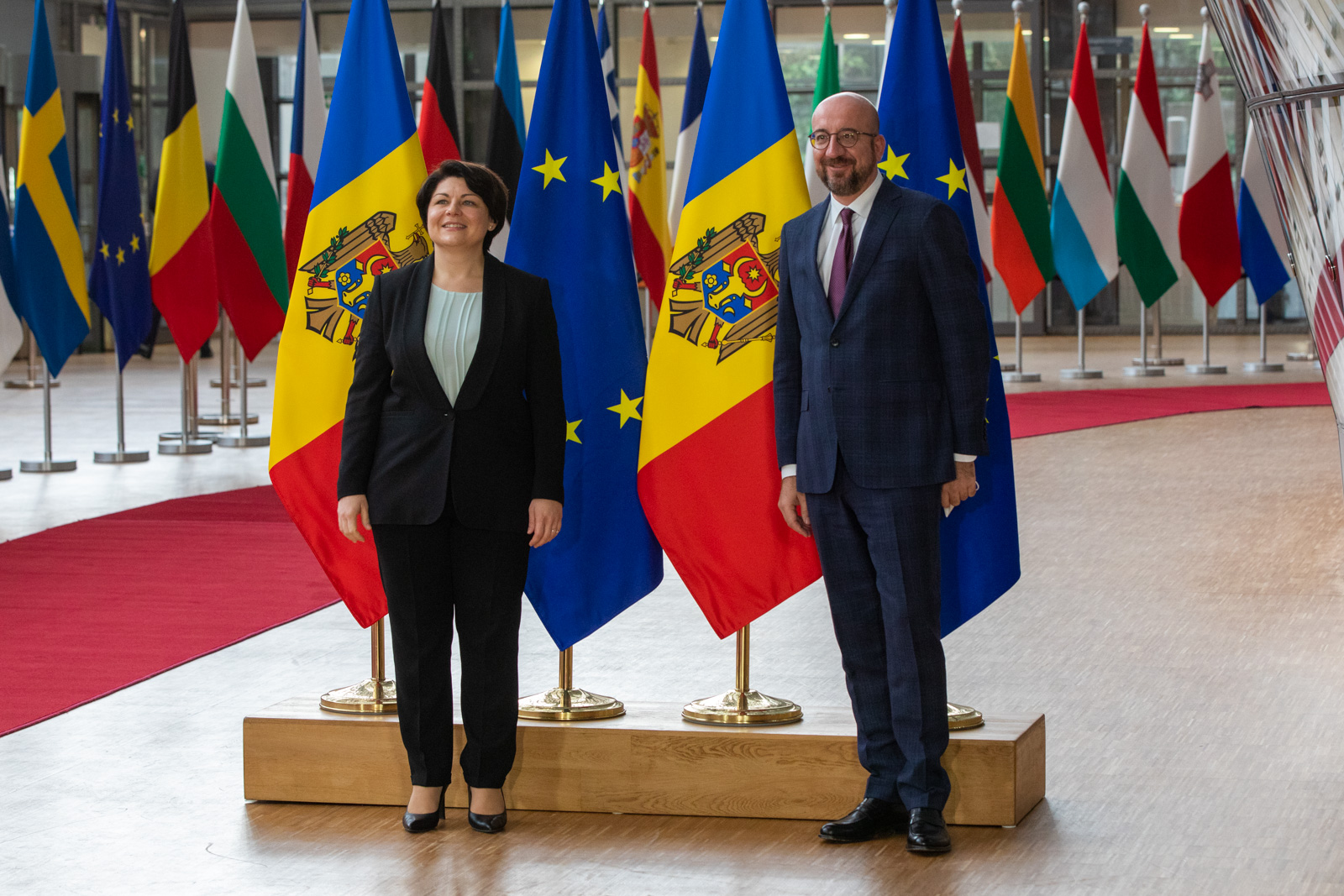
Prime Minister of the Republic of Moldova, Natalia Gavrilita, together with Deputy Prime Minister and Minister of Foreign Affairs, Nicu Popescu, pay an official visit to Brussels, between September 27-28, being invited by High Representative of the European Union for Foreign Affairs and Security Policy, Josep Borrell Fontelles.
Today, Prime Minister had a meeting with Charles Michel, President of the European Council. The Moldovan PM thanked the senior European official for the support of the institution in strengthening democratic processes, reforming the judiciary and state institutions, economic recovery and job creation, as well as increasing citizens’ welfare. Natalia Gavrilita expressed her confidence that the current visit laid the foundations for boosting relations between the Republic of Moldova and the European Union, so that, in the next period, it would be possible to advance high-level dialogues on security, justice and energy. Officials also exchanged views on priorities for the Eastern Partnership Summit, to be held in December.
“The EU is open to continue to support the Republic of Moldova and the ambitious reform agenda it proposes. Moldova is an important and priority partner for us,” said Charles Michel.
Prime Minister Natalia Gavrilita also met with Paolo Gentiloni, European Commissioner for Economy, expressing her gratitude for the support received through the OMNIBUS macro-financial assistance program. The two officials discussed the need to advance the recovery of money from bank fraud, to strengthen sustainable mechanisms for supporting small and medium-sized enterprises in Moldova, and to standardize the customs and taxes as one of the main conditions for deepening cooperation with the EU in this field.
Additionally, Prime Minister spoke about the importance of the Eastern Partnership and the Deep Free Trade Agreement, noting that the Government’s policies are aimed at developing an economic model aligned with the European economic model, focused on digitalization, energy efficiency and the green economy.
A common press release of the Moldovan Prime Minister with High Representative of the European Union for Foreign Affairs and Security Policy/Vice-President of the Commission, Josep Borrell Fontelles, took place today, where the agenda of Moldova’s reforms and the main priorities to focus on in the coming months were presented: judiciary reform; fighting COVID-19 pandemic; promoting economic recovery and conditions for growth and job creation; strengthening state institutions and resilience of the country.
“I am here to relaunch the dialogue between my country and the European Union. Our partnership is strong, but I believe there is room for even deeper cooperation and stronger political, economic and sectoral ties. I am convinced that this partnership is the key to the prosperity of our country and I hope that we will continue to strengthen cooperation.”
The Moldovan delegation met Didier Reynders, European Commissioner for Justice. Tomorrow, there are scheduled common meetings with Oliver Varhelyi, European Commissioner for Neighborhood and Enlargement, Adina Valean, European Commissioner for Transport and Kadri Simson, European Commissioner for Energy.
Prime Minister will also attend a public event, along with Katarina Mathernova, Deputy Director-General for Neighbourhood Policy and Enlargement Negotiations.
Photo: gov.md
Politics
Promo-LEX about Maia Sandu’s UN speech: The president must insist on appointing a rapporteur to monitor the situation of human rights in Transnistria

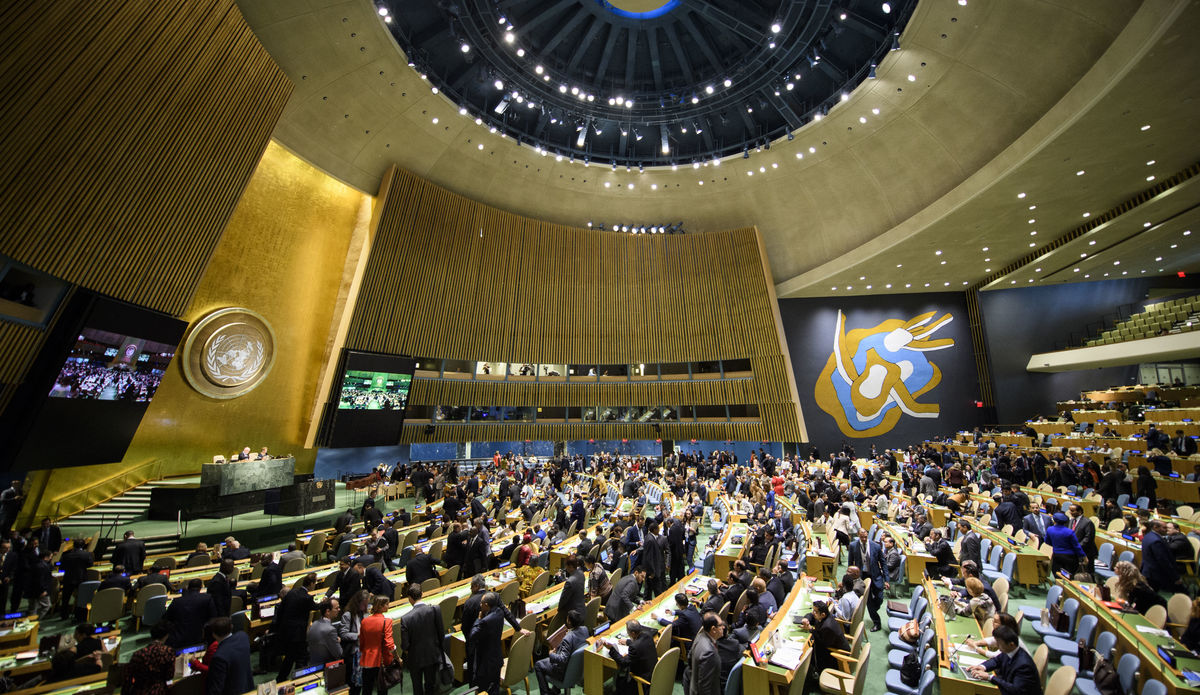
The President of the Republic of Moldova, Maia Sandu, pays an official visit to New York, USA, between September 21-22. There, she participates in the work of the United Nations General Assembly. According to a press release of the President’s Office, the official will deliver a speech at the tribune of the United Nations.
In this context, the Promo-LEX Association suggested the president to request the appointment of a special rapporteur in order to monitor the situation of human rights in the Transnistrian region. According to Promo-LEX, the responsibility for human rights violations in the Transnistrian region arises as a result of the Russian Federation’s military, economic and political control over the Tiraspol regime.
“We consider it imperative to insist on the observance of the international commitments assumed by the Russian Federation regarding the withdrawal of the armed forces and ammunition from the territory of the country,” the representatives of Promo-LEX stated. They consider the speech before the UN an opportunity “to demand the observance of the Universal Declaration of Human Rights by the Russian Federation with reference to this territory which is in its full control.”
“It is important to remember about the numerous cases of murder, torture, ill-treatment, forced enlistment in illegal military structures, the application of pseudo-justice in the Transnistrian region, all carried out under the tacit agreement of the Russian Federation. These findings stem from dozens of rulings and decisions issued by the European Court of Human Rights, which found that Russia is responsible for human rights violations in the region.”
The association representatives expressed their hope that the president of the country would give priority to issues related to the human rights situation in the Transnistrian region and would call on relevant international actors to contribute to guaranteeing fundamental human rights and freedoms throughout Moldova.
They asked Maia Sandu to insist on the observance of the obligation to evacuate the ammunition and the military units of the Russian Federation from the territory of the Republic of Moldova, to publicly support the need for the Russian Federation to implement the ECtHR rulings on human rights violations in the Transnistrian region, and to request the appointment of an UN Human Rights Council special rapporteur to monitor the human rights situation in the Transnistrian region of the Republic of Moldova.
**
The Promo-LEX Association concluded that 14 out of 25 actions planned within the National Action Plan for the years 2018–2022 concerning respecting human rights in Transnistria were not carried out by the responsible authorities.
The association expressed its concern and mentioned that there are a large number of delays in the planned results. “There is a lack of communication and coordination between the designated institutions, which do not yet have a common vision of interaction for the implementation of the plan.”
Promo-LEX requested the Government of the Republic of Moldova to re-assess the reported activities and to take urgent measures, “which would exclude superficial implementation of future activities and increase the level of accountability of the authorities.”
Photo: peacekeeping.un.org

“They are not needy, but they need help”. How Moldovan volunteers try to create a safe environment for the Ukrainian refugees
Reading Time: 3 minutesAt the Government’s ground floor, the phones ring constantly, the laptop screens never reach standby. In one...

#WorldForUkraine – a map that shows the magnitude of the world’s actions against Russian aggression
Reading Time: 2 minutesThe international community and volunteers from all over te world have launched #WorldForUkraine as a platform that...

How is Moldova managing the big influx of Ukrainian refugees? The authorities’ plan, explained
Reading Time: 3 minutesFrom 24th to 28th of February, 71 359 Ukrainian citizens entered the territory of Republic of Moldova....

Russia And Ukraine At The Beginning of 2022
Reading Time: 4 minutesThis opinion piece was written by Dr. Nicholas Dima. Dr. Dima was formerly a Professor of Geography and...


The man raising children on Nistru river
Reading Time: 7 minutesOn the Nistru, near the village of Varnița, a few colored pens with blue dots in the...

The village of the first astronomer in the Republic of Moldova
Reading Time: 5 minutesFrom eight in the morning till noon, every Thursday and Sunday, people lay their merchandise on the...

The prodigal son returns and turns his grandparents’ home in a tourist attraction on Nistru river
Reading Time: 7 minutesOn the road towards the school, a well-maintained rural house catches your eye, yellow stags painted on...

FC Sheriff Tiraspol victory: can national pride go hand in hand with political separatism?
Reading Time: 4 minutesA new football club has earned a leading place in the UEFA Champions League groups and starred...


Study// What is the reaction of authorities to journalistic investigations?
Reading Time: 3 minutes“People expect logical consequences when they see cases of undeclared assets, conflicts of interest, protectionism or proof...

Secretary General of CoE called on Moldova’s state institutions to avoid constitutional crisis. Politicians took it the way they wanted.
Reading Time: 3 minutesAt the beginning of this month, Speaker of Parliament, Zinaida Greceanii, sent a letter to Secretary General...