
Economy
PM Filip: Moldova will not receive the €100 million EU assistance this year

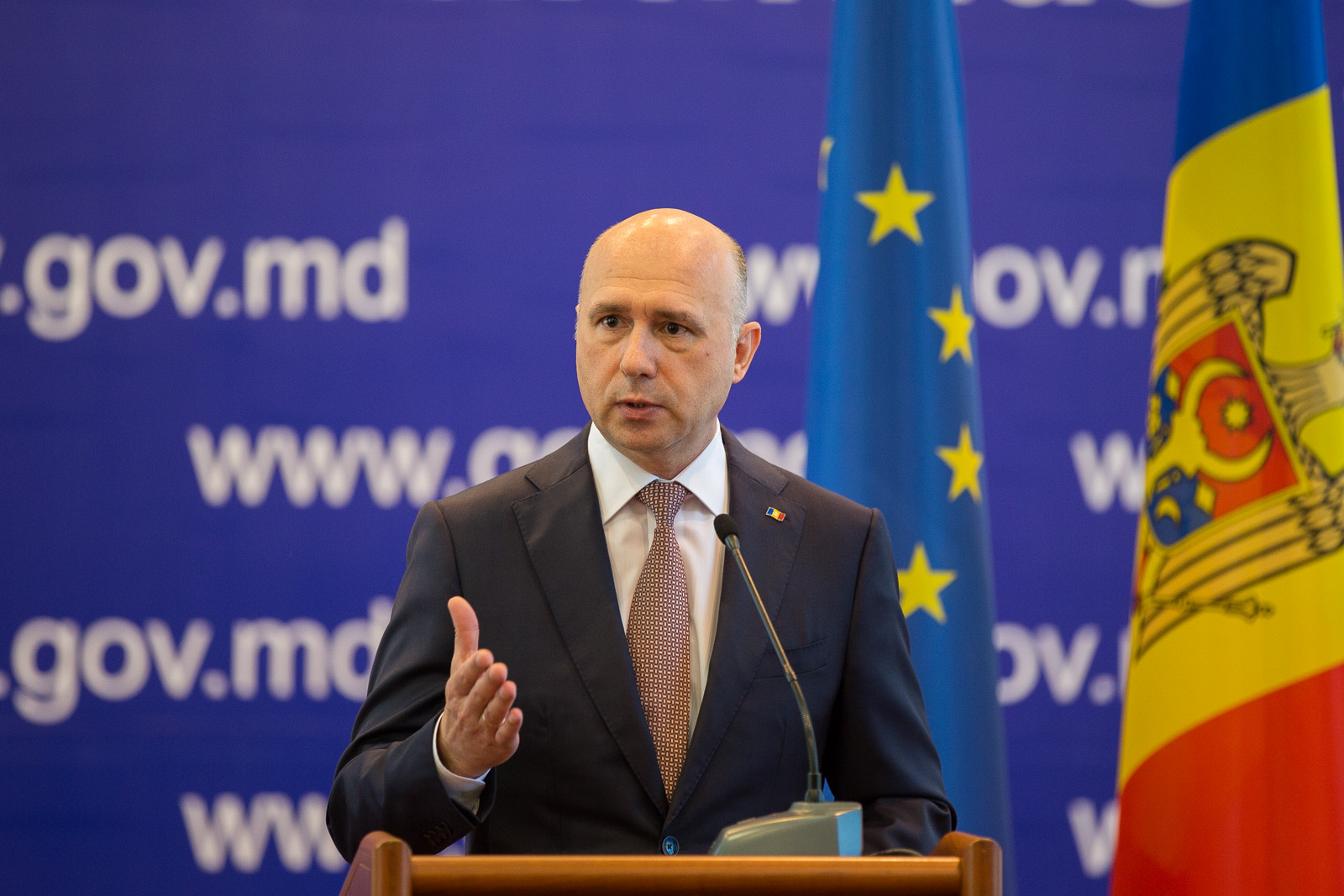
The Republic of Moldova is not going to receive the expected tranches from the 100 million euros macro-financial assistance fund provided by the European Union. At least, in 2017. Quoted by Reuters, Prime-Minister Pavel Filip stated that the fund will not be disbursed
Quoted by Reuters, Prime-Minister Pavel Filip stated that the fund will not be disbursed because the Moldovan authorities have not fulfilled all of the 30 required conditions from the agreement. Moreover, the Finance Minister Octavian Armașu told Reuters that the budget for 2017 had foreseen two trances coming in Moldova’s budget, expressing confidence one would be disbursed in early 2018.
The €100 million macro-financial assistance for the Republic of Moldova consists of 60 million euros in loans and 40 million in grants. Previously, the European Parliament together with the European Commission committed to close monitoring of the democratic character of reforms, such as the electoral system reform. The EU Parliament also underlined that the assistance should support Moldova’s commitment to sound public finance management, fight against corruption and money laundering, the de-politicisation of public administration, an independent judiciary, the freedom of the media. In addition, the Commission promised to temporarily suspend or cancel payments of the €100 million, if agreed conditions are not met.
The main condition put by the EU was for the Moldovan governing coalition to ensure a fully democratic change of the electoral system, with a full consensus of all political forces. A significant part of the Moldovan civil society and five opposition parties does not agree at all with the change of the electoral system but recommend the improvement of the current proportional system and the media environment. The governing Democrats and the “opposition” Socialists are instead going with the mixed system.


Important
#WorldForUkraine – a map that shows the magnitude of the world’s actions against Russian aggression

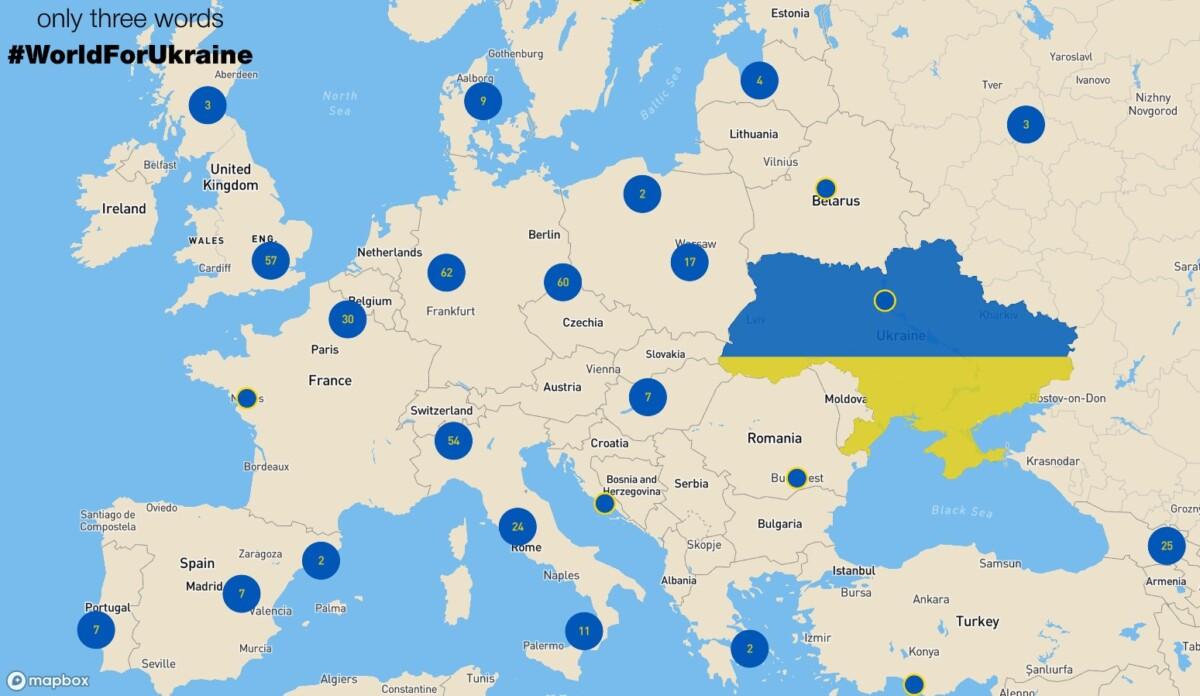
The international community and volunteers from all over te world have launched #WorldForUkraine as a platform that shows the magnitude of the world’s actions against the Russian aggression. In a digital world – it is an interactive map of public support of Ukrainians under the hashtag #WorldForUkraine – rallies, flash mobs, protests around the world. In the physical dimension – it is your opportunity to take to the streets and declare: “No to Putin’s aggression, no to war.”
„Today, along with the political and military support, emotional connection with the civilized world and truthful information are extremely important for Ukraine. The power to do it is in your hands. Join the #WorldForUkraine project and contribute to the victorious battle against the bloodshed inflicted on Ukraine by the aggression of the Russian Federation”, says the „about the project” section of the platform.
Go to the streets — Tell people — Connect and Unite — Become POWERFUL
Volunteers have launched #WorldForUkraine as a platform that shows the magnitude of the world’s actions against Russian aggression. In digital world – it is an INTERACTIVE MAP of public support of Ukrainians worldforukraine.net under the hashtag #WorldForUkraine – rallies, flash mobs, protests around the world. In the physical dimension – it is your opportunity to take to the streets and declare: “No to Putin’s aggression, no to war.” There you may find information about past and future rallies in your city in support of Ukraine. This is a permanent platform for Ukrainian diaspora and people all over the world concerned about the situation in Ukraine.
So here’s a couple of things you could do yourself to help:
* if there is a political rally in your city, then participate in it and write about it on social media with geolocation and the hashtag #WorldForUkraine
* if there are no rallies nearby, organize one in support of Ukraine yourself, write about it on social media with geolocation adding the hashtag #WorldForUkraine
The map will add information about gathering by #WorldForUkraine AUTOMATICALLY
Your voice now stronger THAN ever
All rallies are already here: https://worldforukraine.net
Important
How is Moldova managing the big influx of Ukrainian refugees? The authorities’ plan, explained
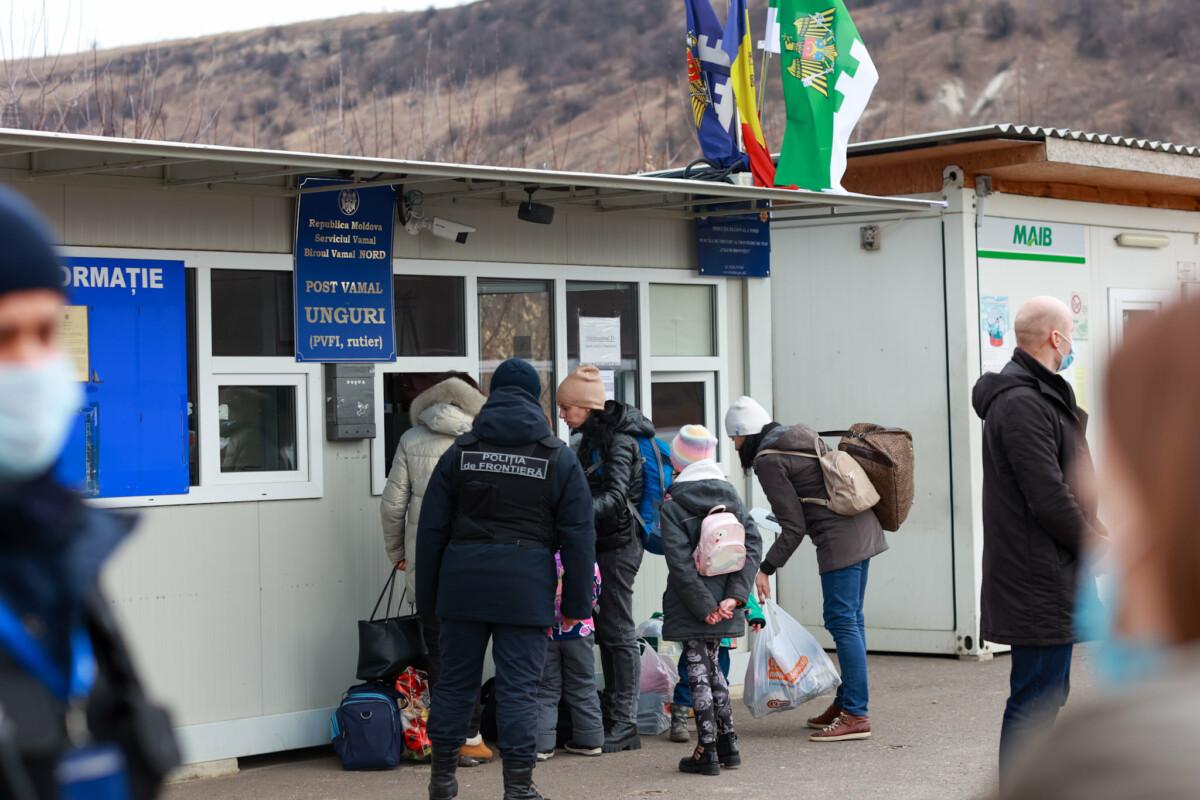
From 24th to 28th of February, 71 359 Ukrainian citizens entered the territory of Republic of Moldova. 33 173 of them left the country. As of this moment, there are 38 186 Ukrainian citizens in Moldova, who have arrived over the past 100 hours.
The Moldovan people and authorities have organized themselves quickly from the first day of war between Russia and Ukraine. However, in the event of a prolonged armed conflict and a continuous influx of Ukrainian refugees, the efforts and donations need to be efficiently managed. Thus, we inquired about Moldova’s long-term plan and the state’s capacity to receive, host, and treat a bigger number of refugees.
On February 26th, the Ministry of Labor and Social Protection of Moldova approved the Regulation of organization and functioning of the temporary Placement Center for refugees and the staffing and expenditure rules. According to the Regulation, the Centers will have the capacity of temporary hosting and feeding at least 20 persons, for a maximum of 3 months, with the possibility of extending this period. The Centers will also offer legal, social, psychological, and primary medical consultations to the refugees. The Center’s activity will be financed from budget allocations, under Article 19 of Provision no. 1 of the Exceptional Situations Commission from February 24th, 2022, and from other sources of funding that do not contravene applicable law.
The Ministry of Inner Affairs and the Government of Moldova facilitated the organization of the volunteers’ group “Moldova for Peace”. Its purpose is to receive, offer assistance and accommodation to the Ukrainian refugees. The group is still working on creating a structure, registering and contacting volunteers, etc. It does not activate under a legal umbrella.
Lilia Nenescu, one of the “Moldova for Peace” volunteers, said that the group consists of over 20 people. Other 1700 registered to volunteer by filling in this form, which is still available. The group consists of several departments:
The volunteers’ department. Its members act as fixers: they’re responsible for connecting the people in need of assistance with the appropriate department. Some of the volunteers are located in the customs points. “The Ministry of Inner Affairs sends us every day the list of the customs points where our assistance is needed, and we mobilize the volunteers”, says Lilia Nenescu.
The Goods Department manages all the goods donated by the Moldavian citizens. The donations are separated into categories: non-perishable foods and non-food supplies. The volunteers of this department sort the goods into packages to be distributed.
The Government intends to collect all the donations in four locations. The National Agency for Food Safety and the National Agency for Public Health will ensure mechanisms to confirm that all the deposited goods comply with safety and quality regulations.
The Service Department operates in 4 directions and needs the volunteer involvement of specialists in psychology, legal assistance (the majority of the refugees only have Ukrainian ID and birth certificates of their children); medical assistance; translation (a part of the refugees are not Ukrainian citizens).
According to Elena Mudrîi, the spokesperson of the Ministry of Health, so far there is no data about the number of Covid-19 positive refugees. She only mentioned two cases that needed outpatient medical assistance: a pregnant woman and the mother of a 4-day-old child.
The Accommodation Department. The volunteers are waiting for the centralized and updated information from the Ministry of Labor about the institutions offering accommodation, besides the houses offered by individuals.
The Transport Department consists of drivers organized in groups. They receive notifications about the number of people who need transportation from the customs points to the asylum centers for refugees.
The municipal authorities of Chișinău announced that the Ukrainian children refugees from the capital city will be enrolled in educational institutions. The authorities also intend to create Day-Care Centers for children, where they will be engaged in educational activities and will receive psychological assistance. Besides, the refugees from the municipal temporary accommodation centers receive individual and group counseling.
In addition to this effort, a group of volunteers consisting of Ana Gurău, Ana Popapa, and Andrei Lutenco developed, with the help of Cristian Coșneanu, the UArefugees platform, synchronized with the responses from this form. On the first day, 943 people offered their help using the form, and 110 people asked for help. According to Anna Gurău, the volunteers communicate with the Government in order to update the platform with the missing data.
Translation from Romanian by Natalia Graur

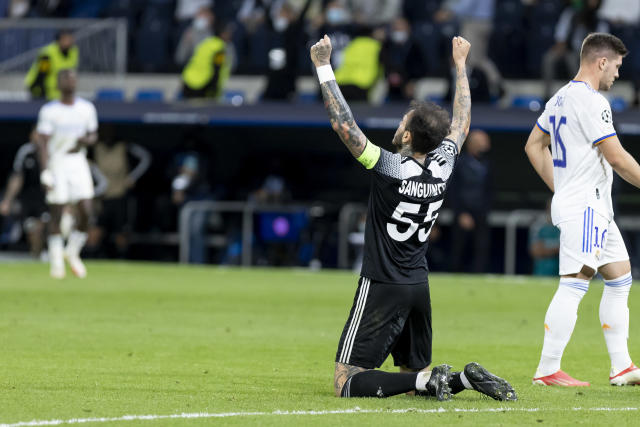
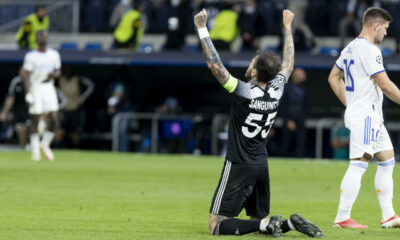
A new football club has earned a leading place in the UEFA Champions League groups and starred in the headlines of worldwide football news yesterday. The Football Club Sheriff Tiraspol claimed a win with the score 2-1 against Real Madrid on the Santiago Bernabeu Stadium in Madrid. That made Sheriff Tiraspol the leader in Group D of the Champions League, including the football club in the groups of the most important European interclub competition for the first time ever.
International media outlets called it a miracle, a shock and a historic event, while strongly emphasizing the origin of the team and the existing political conflict between the two banks of the Dniester. “Football club from a pro-Russian separatist enclave in Moldova pulls off one of the greatest upsets in Champions League history,” claimed the news portals. “Sheriff crushed Real!” they said.
Moldovans made a big fuss out of it on social media, splitting into two groups: those who praised the team and the Republic of Moldova for making history and those who declared that the football club and their merits belong to Transnistria – a problematic breakaway region that claims to be a separate country.
Both groups are right and not right at the same time, as there is a bunch of ethical, political, social and practical matters that need to be considered.
Is it Moldova?
First of all, every Moldovan either from the right or left bank of Dniester (Transnistria) is free to identify himself with this achievement or not to do so, said Vitalie Spranceana, a sociologist, blogger, journalist and urban activist. According to him, boycotting the football club for being a separatist team is wrong.
At the same time, “it’s an illusion to think that territory matters when it comes to football clubs,” Spranceana claimed. “Big teams, the ones included in the Champions League, have long lost their connection both with the countries in which they operate, and with the cities in which they appeared and to which they linked their history. […] In the age of globalized commercial football, teams, including the so-called local ones, are nothing more than global traveling commercial circuses, incidentally linked to cities, but more closely linked to all sorts of dirty, semi-dirty and cleaner cash flows.”
What is more important in this case is the consistency, not so much of citizens, as of politicians from the government who have “no right to celebrate the success of separatism,” as they represent “the national interests, not the personal or collective pleasures of certain segments of the population,” believes the political expert Dionis Cenusa. The victory of FC Sheriff encourages Transnistrian separatism, which receives validation now, he also stated.
“I don’t know how it happens that the “proud Moldovans who chose democracy”, in their enthusiasm for Sheriff Tiraspol’s victory over Real Madrid, forget the need for total and unconditional withdrawal of Russian troops from Transnistria!” declared the journalist Vitalie Ciobanu.
Nowadays, FC Sheriff Tiraspol has no other choice than to represent Moldova internationally. For many years, the team used the Moldovan Football Federation in order to be able to participate in championships, including international ones. That is because the region remains unrecognised by the international community. However, the club’s victory is presented as that of Transnistria within the region, without any reference to the Republic of Moldova, its separatist character being applied in this case especially.
Is it a victory?
In fact, FC Sheriff Tiraspol joining the Champions League is a huge image breakthrough for the Transnistrian region, as the journalist Madalin Necsutu claimed. It is the success of the Tiraspol Club oligarchic patrons. From the practical point of view, FC Sheriff Tiraspol is a sports entity that serves its own interests and the interests of its owners, being dependent on the money invested by Tiraspol (but not only) oligarchs.
Here comes the real dilemma: the Transnistrian team, which is generously funded by money received from corruption schemes and money laundering, is waging an unequal fight with the rest of the Moldovan football clubs, the journalist also declared. The Tiraspol team is about to raise 15.6 million euro for reaching the Champions League groups and the amounts increase depending on their future performance. According to Necsutu, these money will go directly on the account of the club, not to the Moldovan Football Federation, creating an even bigger gab between FC Sheriff and other football clubs from Moldova who have much more modest financial possibilities.
“I do not see anything useful for Moldovan football, not a single Moldovan player is part of FC Sheriff Tiraspol. I do not see anything beneficial for the Moldovan Football Federation or any national team.”
Is it only about football?
FC Sheriff Tiraspol, with a total estimated value of 12.8 million euros, is controlled by Victor Gusan and Ilya Kazmala, being part of Sheriff Holding – a company that controls the trade of wholesale, retail food, fuels and medicine by having monopolies on these markets in Transnistria. The holding carries out car trading activities, but also operates in the field of construction and real estate. Gusan’s people also hold all of the main leadership offices in the breakaway region, from Parliament to the Prime Minister’s seat or the Presidency.
The football club is supported by a holding alleged of smuggling, corruption, money laundering and organised crime. Moldovan media outlets published investigations about the signals regarding the Sheriff’s holding involvement in the vote mobilization and remuneration of citizens on the left bank of the Dniester who participated in the snap parliamentary elections this summer and who were eager to vote for the pro-Russian socialist-communist bloc.
Considering the above, there is a great probability that the Republic of Moldova will still be represented by a football club that is not identified as being Moldovan, being funded from obscure money, growing in power and promoting the Transnistrian conflict in the future as well.
Photo: unknown

“They are not needy, but they need help”. How Moldovan volunteers try to create a safe environment for the Ukrainian refugees
Reading Time: 3 minutesAt the Government’s ground floor, the phones ring constantly, the laptop screens never reach standby. In one...
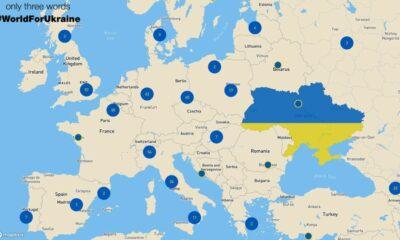

#WorldForUkraine – a map that shows the magnitude of the world’s actions against Russian aggression
Reading Time: 2 minutesThe international community and volunteers from all over te world have launched #WorldForUkraine as a platform that...

How is Moldova managing the big influx of Ukrainian refugees? The authorities’ plan, explained
Reading Time: 3 minutesFrom 24th to 28th of February, 71 359 Ukrainian citizens entered the territory of Republic of Moldova....

Russia And Ukraine At The Beginning of 2022
Reading Time: 4 minutesThis opinion piece was written by Dr. Nicholas Dima. Dr. Dima was formerly a Professor of Geography and...


The man raising children on Nistru river
Reading Time: 7 minutesOn the Nistru, near the village of Varnița, a few colored pens with blue dots in the...

The village of the first astronomer in the Republic of Moldova
Reading Time: 5 minutesFrom eight in the morning till noon, every Thursday and Sunday, people lay their merchandise on the...

The prodigal son returns and turns his grandparents’ home in a tourist attraction on Nistru river
Reading Time: 7 minutesOn the road towards the school, a well-maintained rural house catches your eye, yellow stags painted on...

FC Sheriff Tiraspol victory: can national pride go hand in hand with political separatism?
Reading Time: 4 minutesA new football club has earned a leading place in the UEFA Champions League groups and starred...


Study// What is the reaction of authorities to journalistic investigations?
Reading Time: 3 minutes“People expect logical consequences when they see cases of undeclared assets, conflicts of interest, protectionism or proof...

Secretary General of CoE called on Moldova’s state institutions to avoid constitutional crisis. Politicians took it the way they wanted.
Reading Time: 3 minutesAt the beginning of this month, Speaker of Parliament, Zinaida Greceanii, sent a letter to Secretary General...