
Economy
Ukrainian government examines Belarusian gas trade model with Russia
Reading Time: 3 minutesUkraine’s newly elected President, Viktor Yanukovych, and the new government clamored for low-priced Russian gas from their first day in office. As an opening gambit they called for a price similar to that paid by Belarus; or in the worst case somewhat higher at $200 per one thousand cubic meters of Russian gas.

By Vladimir Socor
Ukraine’s newly elected President, Viktor Yanukovych, and the new government clamored for low-priced Russian gas from their first day in office. As an opening gambit they called for a price similar to that paid by Belarus; or in the worst case somewhat higher at $200 per one thousand cubic meters of Russian gas. Yanukovych himself, Prime Minister Nikolai Azarov, First Deputy Prime Minister Andriy Klyuyev, Deputy Prime Minister Serhiy Tyhypko, and officials from Yury Boyko’s fuel and energy ministry are among those who proceeded from this assumption in their public statements. To achieve that price level, they declared their readiness to share the Ukrainian gas transit system with the Russian Gazprom, through an as yet undefined consortium.
Russian Prime Minister, Vladimir Putin, claims that Belarus qualifies for a cut-rate gas price as a member country of the Russia-Belarus-Kazakhstan Customs Union. With that status, Belarus is seemingly entitled to Russian gas deliveries exempted from Russian export duties. According to Putin, this privilege reduces Minsk’s purchase price by 30 percent at one stroke (Interfax-Ukraine, March 26).
That argument is clearly designed to entice Ukraine’s new government into considering the possibility of joining the Russian-led Customs Union. This idea has few takers, however, even in this Donetsk-rooted government. Moscow could, at most, hope to introduce a degree of ambiguity in the Ukrainian government’s policy deliberations and external signals, weighing the advantages of the EU against those of the Russian-led Customs Union for Ukraine. Any such ambiguity, particularly if it delays the EU-assisted reform of the Ukrainian gas sector, would undermine Kyiv’s credibility and weaken its position vis-à-vis Moscow on gas and other major issues.
Belarus has qualified for a deep discount on Russian gas mainly by sharing ownership of the gas transit company, Beltransgas, with Gazprom. In practice, this means that Belarus pays one part of its gas bill to Russia in cash and another by transferring ownership shares in the national gas infrastructure to Gazprom. Thus, Belarus paid only $49 per one thousand cubic meters of Russian gas during 2009 (the average of four quarterly prices). Belarus is paying $168 in the first quarter of 2010 and it projects an annual average price of $171.5 per one thousand cubic meters of Russian gas for 2010 (Belapan, Interfax, March 26).
While low on the cash component, however, these prices are supplemented by the barter component in the form of infrastructure ownership shares. In 2006, Belarus agreed to transfer 50 percent of shares in Beltransgas to Gazprom, in four annual installments of 12.5 percent each.
On March 31, 2010, Gazprom completed officially the acquisition of 50 percent ownership in Beltransgas, and changed accordingly the composition of Beltransgas’ oversight board and board of directors. Gazprom now proposes to increase its stake beyond 50 percent in the near future, as part of its overall program of investment in export pipelines. It also proposes to switch from the US dollar to the Russian ruble in the Russian-Belarusian gas trade, ostensibly to reduce currency risks for both Belarus and Russia. However, the dollar-denominated oil products basket makes such a switch difficult for gas transactions (Interfax, Belapan, March 31).
The Ukrainian government hopes to persuade voters to accept a loss of control over the national gas transit system, if Russian gas can be bought at $200 per one thousand cubic meters in the cash component of the price. The barter component of the price in the form of assets would in that case become less visible; and the issue of transferring additional assets to pay for Russian gas in the future could be postponed.
At present, Russian gas deliveries to Ukraine and gas transit via the country are covered by agreements signed in January 2009, amended in November 2009, and valid until 2019. The Ukrainian government of Yulia Tymoshenko negotiated these agreements with Putin and Gazprom. Under the sale-and-purchase agreement, Ukraine paid $210 per one thousand cubic meters of Russian gas in 2009 –a 20 percent discount from what Gazprom defined as its netback price in Europe.
In 2010, and thereafter, the discount is removed, aligning Ukraine’s purchase price with that netback price, pegged to the oil products basket on a quarterly basis. Thus, Ukraine pays $306 per one thousand cubic meters of Russian gas in the first quarter of 2010, and will pay $320 in the second quarter (Interfax-Ukraine, March 19-25).
The new government’s first reflex seems to prefer sacrificing national assets for price relief, rather than proceeding to reform the energy sector with EU assistance, as the predecessor government had resolved to do before the recent elections.


Economy
Moldova will receive a disbursement of 36 million euros as part of the the Economic Recovery Plan

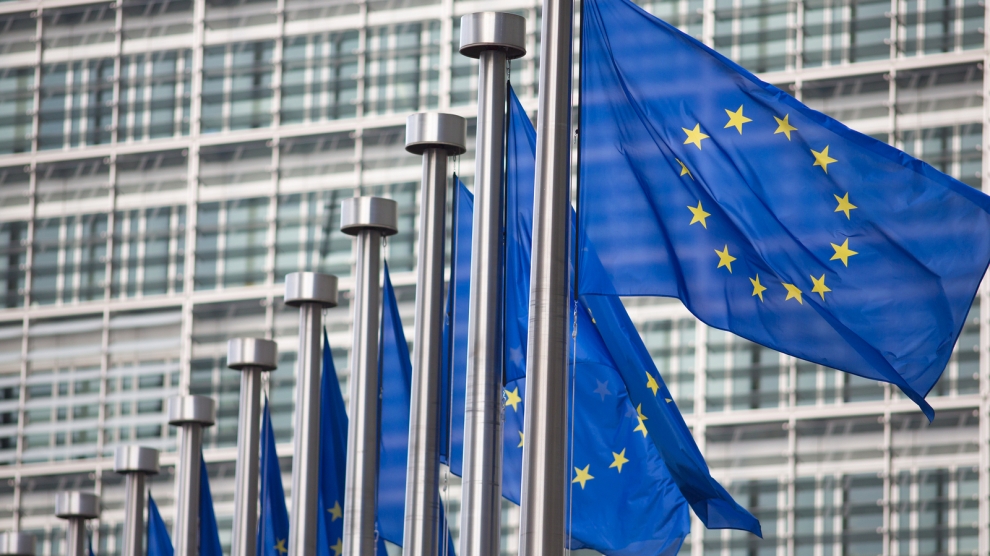
This week, the European Commission approved the disbursement of 36 million euros in grant money for the Republic of Moldova. The announcement was made by Deputy Director-General for Neighbourhood Policy and Enlargement Negotiations at the European Commission, Katarina Mathernova, who paid an official visit to the Republic of Moldova between September 13-15, together with Managing Director for Russia, Eastern Partnership, Central Asia, Regional cooperation and OSCE, at the European External Action Service, Michael Siebert.
The EU officials had meetings with President Maia Sandu, Minister of Foreign Affairs and European Integration, Nicu Popescu, Speaker of Parliament, Igor Grosu, Prime Minister of the country, Natalia Gavrilita, as well as key representatives of Government, international financial institutions and the civil society, according to a press release issued by the Delegation of the European Union to the Republic of Moldova.
Beside such topics as the EU-Moldova relations and prospects, the priorities of the reform agenda of the new Moldovan Government, preparations for the Eastern Partnership Summit at the end of the year and the Transnistrian conflict settlement, the officials also discussed the EU assistance in support of reforms and the Economic Recovery Plan for Moldova, which was announced in June with a total EU support of 600 million euros over the next 3 years.
“The first measures under the Economic Recovery Plan will shortly materialize, with the expected disbursement of 36 million euros in grant money under budget support programmes to support the authorities’ efforts to fight against the consequences of the pandemic. Moldova can count on EU’s assistance on its path to reforms and to recovery, bringing tangible results to citizens,” Katarina Mathernova stated.
The plan is based on assistance provided by the European Union through various bilateral and regional instruments, aiming to mobilize the funds in the form of grants, loans, guarantees and macro-financial assistance.
“The Economic Recovery Plan for the Republic of Moldova involves much more, not just this financial support provided immediately. It must help digital transformation, strengthen infrastructure, energy efficiency, education and support small and medium-sized enterprises,” the EU official also said.
As Prime Minister Natalia Gavrilita informed, “The Economic Recovery Plan and the 5 flagship initiatives for Moldova in the Eastern Partnership will directly contribute to the reform and consolidation of institutions, stimulate long-term socio-economic development, bring direct benefits to citizens, and unleash new economic opportunities through promoting the green agenda and digitization. Small and medium-sized enterprises (SMEs) have been hit hard by the crisis. Promoting and diversifying access to finance and reducing collateral requirements will be essential in supporting economic operators. We are grateful to the EU partners who will launch two programs to support 50 000 independent Moldovan SMEs to adapt to the new conditions.”
President of the Republic of Moldova, Maia Sandu, welcomed the decision of the European Union to disburse about 745 million lei in grant money, as the official page of the President’s Office announced. “EU support comes after a long period of freezing of European assistance, caused by former governments. We managed to relaunch the political dialogue with the European Union and resume financial assistance. The Republic of Moldova is gradually regaining the trust of its strategic partners. This European support is also a signal of encouragement for the new Government team in its commitment to clean up the institutions, fight corruption and launch development programs in the country,” said Maia Sandu.
Photo: unknown
Economy
Romania and Moldova signed a partnership memorandum pledging to cooperate in promoting their wines
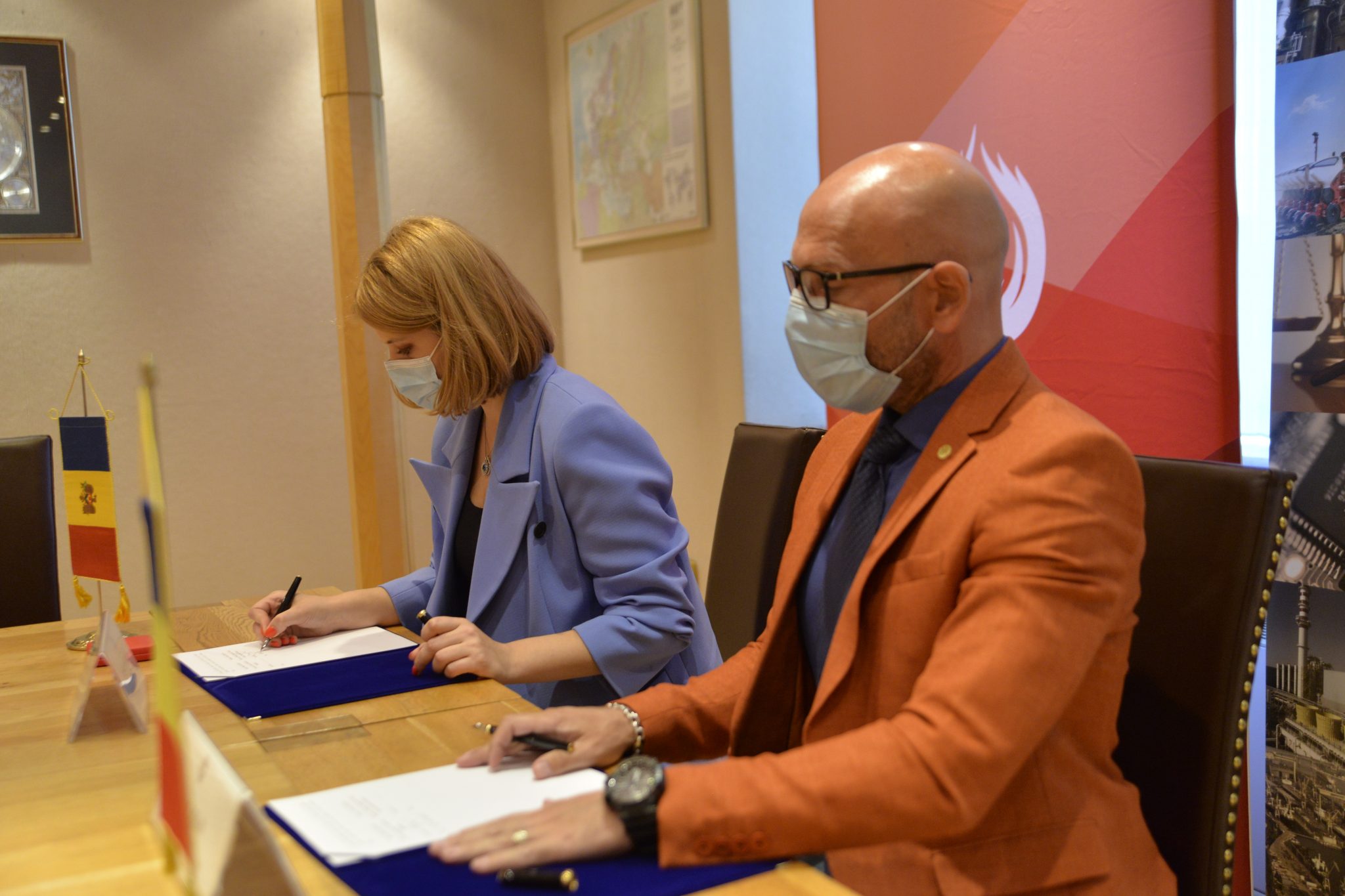
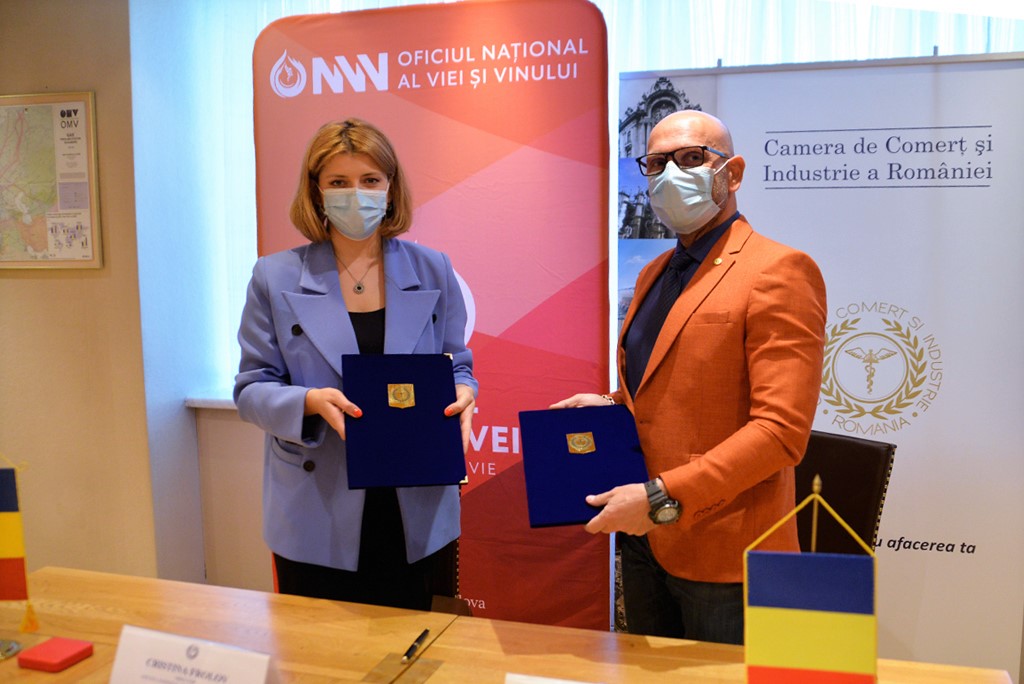
The Chamber of Commerce and Industry of Romania (CCIR) and the National Office for Vine and Wine (NOVW) of the Republic of Moldova signed, last week, a memorandum of cooperation on organizing joint promotional activities in the markets of common interest, as the CCIR announced.
China, Japan or the USA are just some of the markets targeted by the Romanian and Moldovan institutions. The memorandum also involves advertising activities for wines from common indigenous varieties, promoting the oeno-tourist region, developing a tourist route in the two states, exchange of experience, study visits, and mutual support in identifying new export opportunities. “We are very confident that this collaboration between our organizations will lead to sustainable economic growth and a higher degree of well-being among Moldovans and Romanians,” claimed Deputy Secretary-General of CCIR, Bogdan Visan.
On the other hand, Director of the NOVW, Cristina Frolov, declared that no open competition with Romania is aimed at the governmental level of the Republic of Moldova. “This request for collaboration is a consequence of the partnership principle. Romania imports 10-12% of the wine it consumes, and we want to take more from this import quota. Every year, the Romanian market grows by approximately 2.8%, as it happened in 2020, and we are interested in taking a maximum share of this percentage of imported wines without entering into direct competition with the Romanian producer,” the Moldovan official said. She also mentioned that Moldova aims at increasing the market share of wine production by at least 50% compared to 2020, and the number of producers present on the Romanian market – by at least 40%.
Source: ccir.ro
**
According to the data of the Romanian National Trade Register Office, the total value of Romania-Moldova trade was 1.7 billion euros at the end of last year and over 805 million euros at the end of May 2021. In July 2021, there were 6 522 companies from the Republic of Moldova in Romania, with a total capital value of 45.9 million euros.
The data of Moldova’s National Office of Vine and Wine showed that, in the first 7 months of 2021, the total quantity of bottled wine was about 27 million litres (registering an increase of 10% as compared to the same period last year), with a value of more than one billion lei, which is 32% more than the same period last year. Moldovan wines were awarded 956 medals at 32 international competitions in 2020.
Photo: ccir.ro

The Republic of Moldova has perfect weather conditions for growing walnut trees, that creating a great potential of walnut production and trade, especially on international markets, where the demand is way higher than the product’s supply. National and international experts believe that the country’s walnut production industry is on the verge of important transformations, which could lead to increased yields, quality and competitiveness worldwide.
According to authorities, Moldova exports 34-35 thousand tons of walnuts in shell, which is about 7% of the total export of fruit and 5% of the total export of horticultural products. The export value is assessed as being $120 million, that being 57-60% of the total fruit export value and about 50% of horticultural export value. Most of walnut crops are exported to the EU countries, such as France, Germany, the Netherlands, Romania and Austria. The country’s exports were among the world’s top 10 when it comes to the highest dollar value of the product during 2020.
Viorel Gherciu, Minister of Agriculture and Food Industry, pointed out that the production in the domestic walnut industry has increased by 55% in the last five years, which ranks Moldova among the main producers in the world.
“The biggest opportunity for this industry is that we are in the geographical proximity of the largest walnut import area in the world, which is the European Union, with almost 40% of total imports in the world. We are on the EU border, with privileged relations, with an Association Agreement. We already enjoy a good relationship in working with European importers, they trust our processors. A very close collaboration has been created and this is, in fact, the guarantee for those who invest in the area,” claimed the president of the Walnut Producers Association, Oleg Tirsina.
The data provided by the National Bureau of Statistics show that there are 34.7 thousand hectares of walnut plantations in the country. 20.90 hectares are represented by orchards. 75% of planted orchards are formed of old varieties trees. 30-35% of the exported production comes from orchards, the rest comes from individual farmers and plantations along the roads. This means that the quality of walnut production is not at its maximum potential. Developing commercial plantations through orchards modernization and extension of walnut varieties would provide double yield and better quality, experts say.
Governmental support in the form of subsidizing solutions, foreign investments and credit options are indispensable for the industry development. One of the financing options is the credit line of the European Investment Bank Project. Since 2016, 15 producers and processors of nuts, almonds and hazelnuts have benefited from these loans with the total amount of investments worth 8.7 million euros. A further extension of the project would provide another 60 million euros for the modernization of the horticultural sector in general and for harvesting organic walnuts in particular.
Photo: heymoldova.com

“They are not needy, but they need help”. How Moldovan volunteers try to create a safe environment for the Ukrainian refugees
Reading Time: 3 minutesAt the Government’s ground floor, the phones ring constantly, the laptop screens never reach standby. In one...

#WorldForUkraine – a map that shows the magnitude of the world’s actions against Russian aggression
Reading Time: 2 minutesThe international community and volunteers from all over te world have launched #WorldForUkraine as a platform that...


How is Moldova managing the big influx of Ukrainian refugees? The authorities’ plan, explained
Reading Time: 3 minutesFrom 24th to 28th of February, 71 359 Ukrainian citizens entered the territory of Republic of Moldova....


Russia And Ukraine At The Beginning of 2022
Reading Time: 4 minutesThis opinion piece was written by Dr. Nicholas Dima. Dr. Dima was formerly a Professor of Geography and...


The man raising children on Nistru river
Reading Time: 7 minutesOn the Nistru, near the village of Varnița, a few colored pens with blue dots in the...


The village of the first astronomer in the Republic of Moldova
Reading Time: 5 minutesFrom eight in the morning till noon, every Thursday and Sunday, people lay their merchandise on the...


The prodigal son returns and turns his grandparents’ home in a tourist attraction on Nistru river
Reading Time: 7 minutesOn the road towards the school, a well-maintained rural house catches your eye, yellow stags painted on...

FC Sheriff Tiraspol victory: can national pride go hand in hand with political separatism?
Reading Time: 4 minutesA new football club has earned a leading place in the UEFA Champions League groups and starred...


Study// What is the reaction of authorities to journalistic investigations?
Reading Time: 3 minutes“People expect logical consequences when they see cases of undeclared assets, conflicts of interest, protectionism or proof...


Secretary General of CoE called on Moldova’s state institutions to avoid constitutional crisis. Politicians took it the way they wanted.
Reading Time: 3 minutesAt the beginning of this month, Speaker of Parliament, Zinaida Greceanii, sent a letter to Secretary General...